
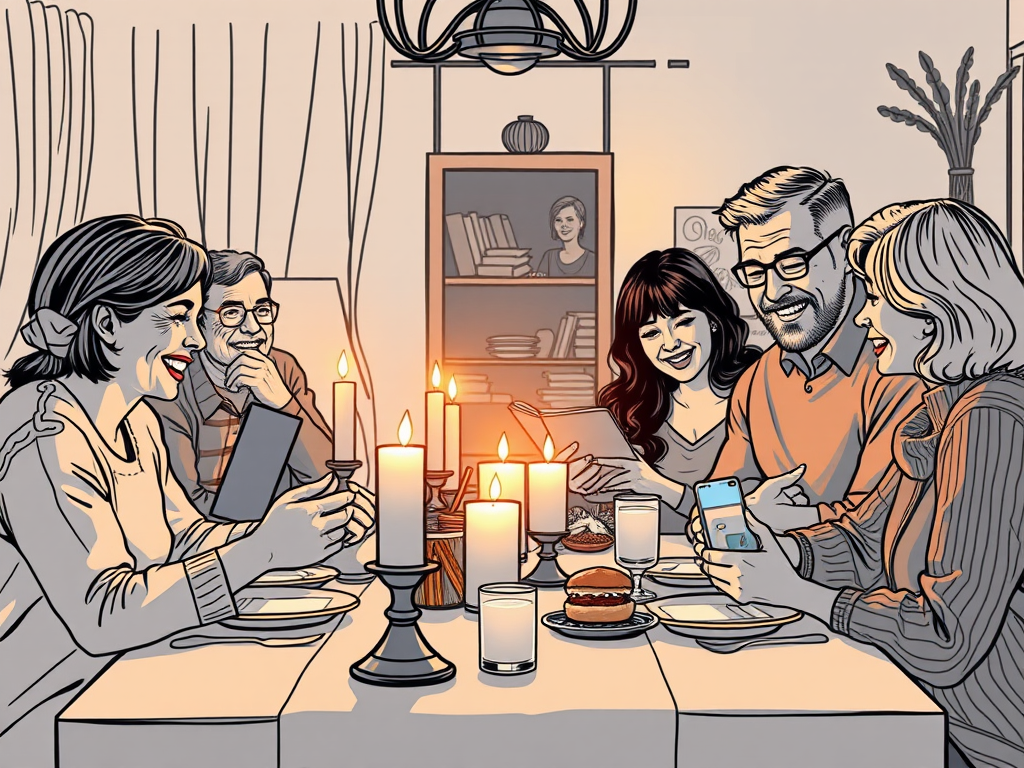
Growing up, my paternal family would gather at my grandmother’s house for Christmas, Thanksgiving, and other special occasions. My uncles and father delighted in sharing amusing tales from their childhood—tales filled with harmless tricks played on my young, widowed grandmother. Eyes sparkling with laughter, tears sometimes streamed down their faces as they recalled the times they pretended to break the TV or staged accidents, lying ‘unconscious’ on the ground.
When my grandmother remarried, her daughter, my aunt, became the target of the pranksters’ mischief. With the arrival of the grandchildren, the identity of my paternal family crystallized: we were the pranksters. We reveled in these stories, and I cherished watching my family relive their past, united in joy around the dining room table.
Stories come in countless forms, yet they all share one powerful trait: they shape our identity. Whether it’s a cherished book, a childhood poem, or a family anecdote, these stories resonate within us. They evoke emotions, transport us through time, and root us in our shared history.
In today’s society, we often observe a troubling detachment among people. I believe this stems from a profound loss of stories. Yes, we are inundated with stories on social media and television, but these are not the narratives I’m referring to.
Social media storytelling often represents mere snippets of information, crafted with the intent of selling something—whether it’s a product, a persona, or a curated experience. We ‘sell’ ourselves, seeking validation in the form of likes from like-minded individuals. Yet, these stories fail to unite us; they do not foster a connection to our historical or familial roots.
What I long for are the stories passed down through generations, narratives created not for likes but for fostering a sense of belonging. These stories weave us into the fabric of family, community, and culture. They elicit laughter and tears and reinforce our sense of heritage.
As I observe people on public transportation, at work, in restaurants, or even around family kitchen tables, I see them transfixed by their screens—the blue light captivating their attention. Families are often engrossed in their phones, virtually connected to fragments of information, while the opportunity to share real stories—about their past, about our neighborhoods, or about cultural events that shape our daily lives—slips away unnoticed. They could reminisce about loved ones who have departed but remain an integral part of our identities. They could tell tall tales of their younger years.
However, this is not the story of 2025. We are disconnected, relying on social media’s distorted version of reality. As I reflect on the growing hatred in society, the fear children face at school, the obsession with constructed beauty, and the pervasive loneliness afflicting many, I ponder whether what we truly miss is more than just stories. We are missing the narratives that define us—what unites us, what makes us unique, and what encapsulates the essence of being human.
We have become a culture distanced from our heritage, severing our ties with past generations. Without these connections, we lose our sense of belonging to a greater continuum—a tapestry of humanity. We have become distracted from what truly matters. We have become victims of the blue light.
If you enjoy reading my insights and would like to stay updated on my latest posts, please subscribe to my blog for email notifications. Subscription is free!
 RosieGlobal
You must be logged in to post a comment.