
“Evil, I think, is the absence of empathy.” — Captain G.M. Gilbert, Army psychologist at the Nuremberg Trials
Gilbert observed this moral void among Nazi defendants, noting their inability to connect emotionally with other human beings. Evil, then, may not stem from a desire to harm but from an unwillingness—or incapacity—to care. It is not always malicious action that defines evil, but a haunting indifference to suffering.
This idea weighs heavily as, while I write this blog, the U.S. Senate debates what some hail as the “Big Beautiful Bill” and others condemn as the “Big Ugly Bill.” Regardless of where one stands politically, the consequences of this legislation are monumental—particularly for those most reliant on governmental support.
If enacted, 12 million people could lose Medicaid, their only access to health insurance, according to projections from the Congressional Budget Office and several health policy organizations. To remain eligible, individuals may be required to work up to 80 hours per week and re-apply every six months.
Reforms to the Supplemental Nutrition Assistance Program (SNAP) would transfer funding responsibility to states and impose work requirements on childless enrollees—measures that threaten the lifeline of over 40 million low-income Americans.
What disturbs me is not the political debate, but the absence of a deeper question: What will this mean for the future of our society?
In 2023, 11.1% of the population—roughly 36.8 million Americans—lived below the poverty line, according to the U.S. Census Bureau. Nearly 29% of the population lived in low-income families, defined by the Pew Research Center as earning less than two-thirds of the national median income.
In 2022, about 12.8% of Americans experienced food insecurity, according to the U.S. Department of Agriculture. On a global scale, the Organization for Economic Cooperation and Development (OECD) reports that the U.S. has the highest poverty rate among its 26 most developed member countries. Further, a UNICEF study ranks the United States second in relative child poverty, surpassed only by Mexico, when measured against 35 of the world’s richest nations. The weight of these statistics is not just economic—it’s existential.
Childhood poverty isn’t a temporary hardship. It’s a chronic condition with lasting consequences. The longer a child lives in poverty, the less likely they are to escape it. According to Ballard Brief, children who grow up poor are up to 46% more likely to remain poor into adulthood. Every year spent in poverty decreases the chance of escaping it by nearly 20%. This isn’t just misfortune. It’s a broken system of intergenerational inequity.
And now, we’re preparing to cut deeper into the support structures these children rely on.
The familiar refrain is: “Children are our future.” But what kind of future are we building if one-third of our children are undernourished, undereducated, and underserved?
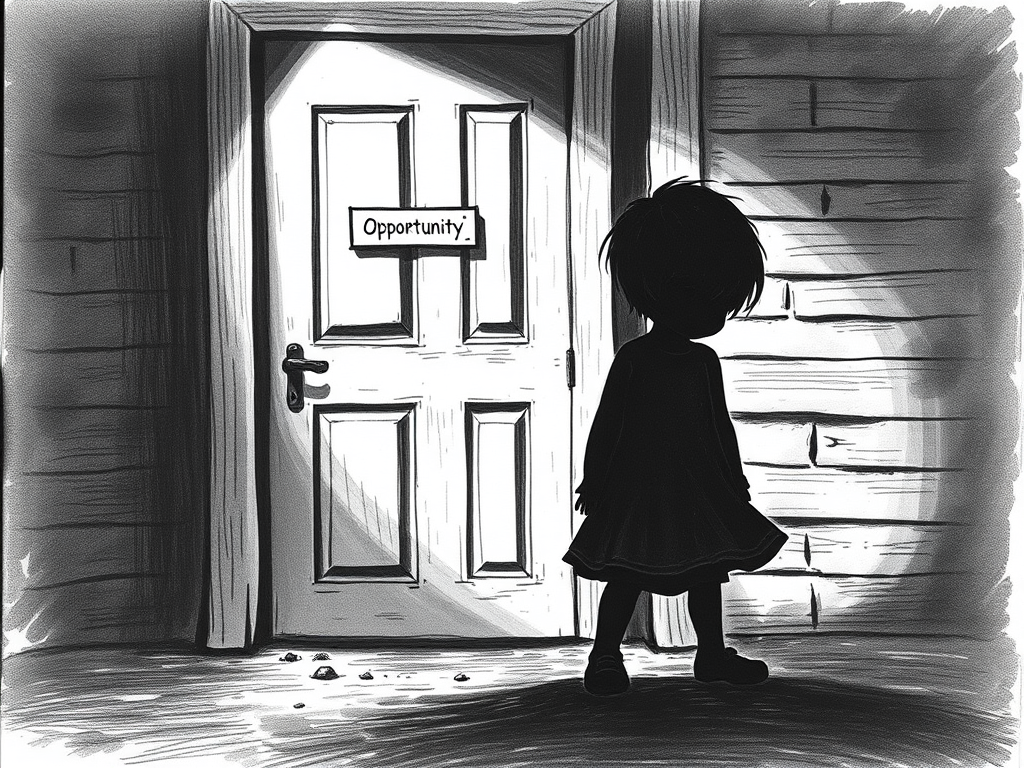
Children in low-income families have limited access to quality education and nutritious food. Healthcare is a luxury, and safe environments are not guaranteed. The playing field isn’t just uneven—it’s obstructed. They are given fewer tools, fewer chances, and less support to climb toward a stable adulthood.
The bill currently under debate doesn’t just trim budgets—it trims hope. By withdrawing investment in childhood development, we are not just ignoring our most vulnerable; we are sabotaging society’s long-term potential.
So, what is the alternative?
We invest. We level the playing field. We provide children—regardless of income—with access to safe schools, nourishing food, sports programs that heal hearts and build character, and environments that spark ambition instead of extinguishing it. We make sure their caretakers are well nourished and can provide a stable environment for them. We invest in their communities, making them safe places to love and thrive.
This kind of investment requires compassion, and yes, it costs money—lots of it. But then, what kind of revenue do we value more? Extra profits for the already privileged or a robust, equitable society?
Empathy is not weakness. It’s strength. Compassion is not charity. It’s policy. And societal evil? It isn’t born from malice—it grows in the shadow of indifference.
If you enjoy reading my insights and would like to stay updated on my latest posts, please subscribe to my blog for email notifications. Subscription is free!
 RosieGlobal
You must be logged in to post a comment.