
As a child, I struggled to understand how adults could be so out of touch with the latest music hits, fashion trends, or the evolving societal landscape. I vowed never to become like them, those older individuals seemingly disconnected from reality.
Now, by my childhood definition, I am one of those older people. I find myself unfamiliar with most of the artists in the top 20 music charts, and I honestly cannot even put a name to an influencer. In my defense, I do make an effort to stay informed about fashion trends, although many are simply not suitable for someone my age. I have to admit: I’ve lost touch with certain aspects of modern culture.
What I find most disconcerting, however, is the sense that humankind has lost touch with itself and the world around us. I’m not just speaking of music or fashion, but rather the fundamental connections we share with other people, with nature, and with the ethical standards that distinguish us from other species.
Since the onset of the COVID-19 pandemic, the world has shifted dramatically. The virus has caused millions of deaths globally—over 6.9 million confirmed as of October 2023—along with widespread indirect impacts, including mental health crises. Reports indicate that the prevalence of depression and anxiety disorders has skyrocketed during and after the pandemic, with studies from the World Health Organization showing a 25% increase in anxiety and depression worldwide. Moreover, the incidence of autoimmune diseases has risen substantially, reflecting the complex interplay between stress, immunity, and physical health.
We’re witnessing war in Europe, genocide in Israel, and the rise of extreme political and societal divisions. Our planet’s environment is deteriorating, with the World Wildlife Fund estimating that nearly 1 million species are at risk of extinction due to habitat loss, climate change, and pollution. The frequency and intensity of natural disasters, from hurricanes to wildfires, continue to escalate as climate change progresses- the UN reporting that climate-related disasters have increased fivefold over the past 50 years.
What we once considered ethical conduct, whether in politics, the workplace, or interpersonal relationships, has been tested and, frankly, has often failed. Social media has become a treacherous landscape, rife with misinformation, fake imagery, and polarizing narratives. The once free-spirited Western world seems to be succumbing to a climate of fear that stifles self-expression and meaningful dialogue about the issues that shape our lives. Instead of coming together, we find ourselves divided, manipulated by those who thrive on chaos and discord. In short, we are on a path toward de-civilization, drifting away from what it means to be human.
When did human interaction become transactional? Why do we expect something in return when we extend a helping hand? Why does my friend, who preaches humility and compassion in church, justify removing homeless people from public spaces because they make her “uncomfortable”? When did we start labeling those unable to work due to illness as ‘sloths’? When did social media influencers start shaping how boys view girls? Why are so many young people—especially women—struggling with depression? Why do we find ourselves in a culture of hate against those with opposing views? When did I become hesitant to read the news, fearing exposure to more tragedies or witnessing politicians prioritize money over empathy and ethics?
Perhaps I’ve lost touch with the world more than I realized. Maybe I’m still clinging to the mindset I had as a child—believing the world was beautiful, full of possibility, and waiting to be discovered. Is it outdated to advocate for human rights and gender equality? Is trying to save even a small piece of the world futile, because people fear drama and retaliation? Maybe I should step back and stop trying to understand a world I increasingly find baffling.
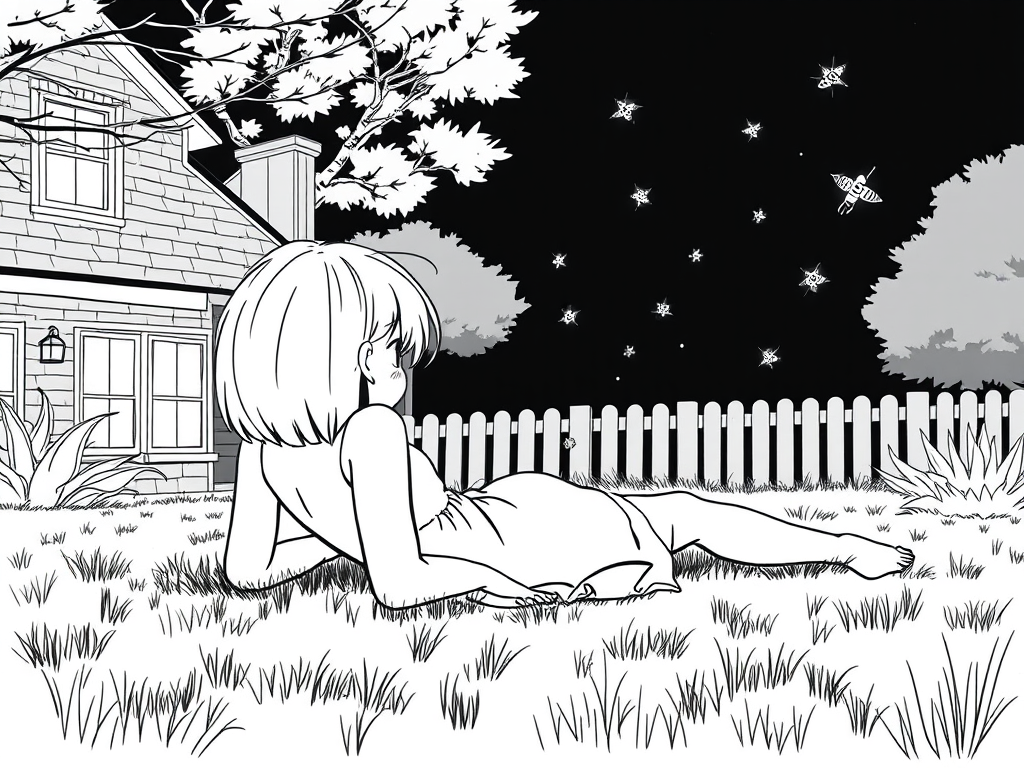
As a child, I would gaze up at the night sky, contemplating what lay beyond the stars. I watched fireflies dance in the dark, creating a magical display for those who took the time to notice. I felt the earth beneath me—its weight, its history, its power. The world was something to admire, to explore, to be in awe of. It pulsed with life, and I could feel it in every fiber of my being.
Even though the stars are less visible and firefly populations are dwindling due to environmental changes, I can still relive those cherished moments from my childhood, reawakening the same feelings I experienced lying on the ground decades ago. Perhaps that’s what we all need to do—lie on the earth, look up at the stars, and reconnect with who we once were. Maybe, just maybe, in doing so, we can feel the earth beneath us and remember what it means to be human again.
If you enjoy reading my insights and would like to stay updated on my latest posts, please subscribe to my blog for email notifications. Subscription is free!
 RosieGlobal
You must be logged in to post a comment.