Welcome to my blog! My name is Rosie, and I am a sociologist of religion with a master’s degree in Middle East Studies. I also have a background in the public sector and government.
This blog serves as a platform for my reflections on current affairs, history, politics, and, of course, religion. As a passionate lover of the arts, I often draw on literature and other artistic forms to enhance and illustrate my thoughts. Alongside sharing my opinions, I aim to shed light on happenings that don’t always make it to the front pages of newspapers.
As a novice blogger, I greatly appreciate any feedback I might receive. At the same time, I reserve the right to express my opinions freely.
If you enjoy reading my insights and would like to stay updated on my latest posts, please subscribe to my blog for email notifications. Subscription is free!
Thank you for visiting, and I hope you find my writings engaging!
Growing up, my paternal family would gather at my grandmother’s house for Christmas, Thanksgiving, and other special occasions. My uncles and father delighted in sharing amusing tales from their childhood—tales filled with harmless tricks played on my young, widowed grandmother. Eyes sparkling with laughter, tears sometimes streamed down their faces as they recalled the times they pretended to break the TV or staged accidents, lying ‘unconscious’ on the ground.
When my grandmother remarried, her daughter, my aunt, became the target of the pranksters’ mischief. With the arrival of the grandchildren, the identity of my paternal family crystallized: we were the pranksters. We reveled in these stories, and I cherished watching my family relive their past, united in joy around the dining room table.
Stories come in countless forms, yet they all share one powerful trait: they shape our identity. Whether it’s a cherished book, a childhood poem, or a family anecdote, these stories resonate within us. They evoke emotions, transport us through time, and root us in our shared history.
In today’s society, we often observe a troubling detachment among people. I believe this stems from a profound loss of stories. Yes, we are inundated with stories on social media and television, but these are not the narratives I’m referring to.
Social media storytelling often represents mere snippets of information, crafted with the intent of selling something—whether it’s a product, a persona, or a curated experience. We ‘sell’ ourselves, seeking validation in the form of likes from like-minded individuals. Yet, these stories fail to unite us; they do not foster a connection to our historical or familial roots.
What I long for are the stories passed down through generations, narratives created not for likes but for fostering a sense of belonging. These stories weave us into the fabric of family, community, and culture. They elicit laughter and tears and reinforce our sense of heritage.
As I observe people on public transportation, at work, in restaurants, or even around family kitchen tables, I see them transfixed by their screens—the blue light captivating their attention. Families are often engrossed in their phones, virtually connected to fragments of information, while the opportunity to share real stories—about their past, about our neighborhoods, or about cultural events that shape our daily lives—slips away unnoticed. They could reminisce about loved ones who have departed but remain an integral part of our identities. They could tell tall tales of their younger years.
However, this is not the story of 2025. We are disconnected, relying on social media’s distorted version of reality. As I reflect on the growing hatred in society, the fear children face at school, the obsession with constructed beauty, and the pervasive loneliness afflicting many, I ponder whether what we truly miss is more than just stories. We are missing the narratives that define us—what unites us, what makes us unique, and what encapsulates the essence of being human.
We have become a culture distanced from our heritage, severing our ties with past generations. Without these connections, we lose our sense of belonging to a greater continuum—a tapestry of humanity. We have become distracted from what truly matters. We have become victims of the blue light.
If you enjoy reading my insights and would like to stay updated on my latest posts, please subscribe to my blog for email notifications. Subscription is free!
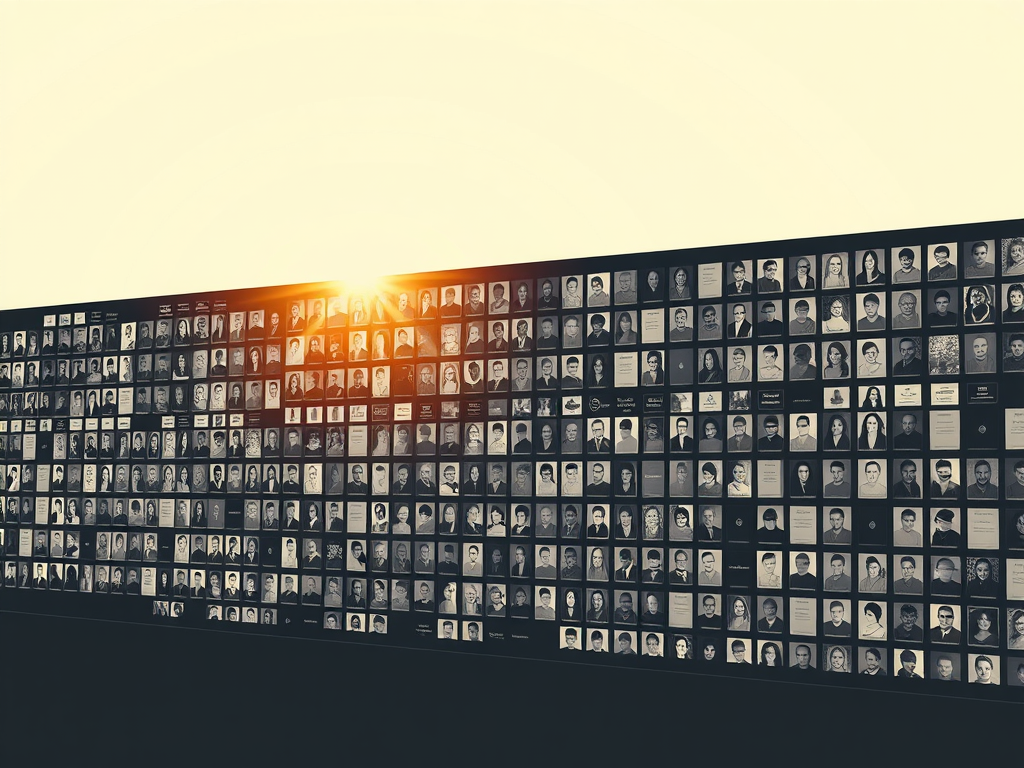
This past Sunday, March 9th, the British observed their annual Covid Day of Reflection. In London, a Highland piper led bereaved relatives and well-wishers along the national Covid memorial wall, which features 3,000 photographs of individuals who lost their lives to the virus—a small portion of the total 227,000 deaths in the UK alone. According to the World Health Organization, at least 3 million people died, directly or indirectly, due to Covid infections in 2020 alone. As of March 9th, 2025, there have been 7,090,763 confirmed Covid-induced deaths reported worldwide.
Moreover, it has been estimated that, as of January 2023, taking into account likely Covid-related deaths through excess mortality, the pandemic has caused between 19.1 million and 36 million deaths globally. (1)
With so much unfolding in the world, the pandemic seems like a distant memory. But it has only been five years, and the world is still grappling with its aftermath. In an article published in Nature magazine in August 2024, titled “Long COVID: Science, Research, and Policy,” researchers Ziyad Al-Aly et al. stated that “the cumulative global incidence of long COVID is around 400 million individuals, which is estimated to have an annual economic impact of approximately $1 trillion—equivalent to about 1% of the global economy.”
Beyond the economic distress, the effects of long Covid are devastating for those affected. Many are battling a chronic illness that the medical community has yet to fully understand, let alone treat. Most have lost their jobs and sources of income, becoming socially isolated due to debilitating fatigue among other symptoms. Prospects for a cure appear bleak, as this multi-system disease manifests differently in each individual, complicating efforts to develop a universal treatment.
In addition to the emergence of a new chronic disease, Covid—along with the measures implemented during the pandemic—has been identified as a contributing factor in the rising number of individuals struggling with mental health issues. Many of these individuals are children and young adults who have struggled to cope with the shutdown of schools, social distancing mandates, community lockdowns, and strict quarantine measures. The lack of social interaction and the fear of contagion have left an indelible mark on an entire generation.
Family members of those who died during the pandemic continue to feel the pain of not being able to hold their loved ones’ hands in their final moments or say goodbye in person. They remember poignant moments, such as the funeral of the late Prince Philip, where Queen Elizabeth II sat alone in her seat wearing a face mask, unwittingly becoming a symbol of the grief many faced—most of whom were denied the chance to organize proper funerals due to restrictions.
Socio-Political Shifts
In 2021, Kahl and Wright published their book “Aftershocks,” analyzing the pandemic’s impact and long-term effects on national and international politics. They draw comparisons to the Great Influenza of 1918, arguing that pandemics can “shape international order by undermining the material capabilities of key states and by producing contingent historical events that ripple through time. The agitation of underlying forces within and between countries can strain economies, worsen inequality, and contribute to social and political unrest.” The parallels to our post-Covid era are striking. Various scientific publications have noted that deglobalization and increased nationalism and isolationism are socio-political shifts that can be traced back to the pandemic.
So, what does this mean for us? History teaches us that the post-pandemic era following the Great Influenza was fraught with challenges that preceded even darker times. The Roaring Twenties, a period where many sought refuge in entertainment after the devastations of the Great Influenza and World War I, was short-lived and led to the Great Depression and the rise of Nazism. History also demonstrates that in times of crisis, people often focus on protecting ‘their own,’ unwittingly alienating ‘the other.’
Today, we find ourselves witnessing economic decline, increased protectionist measures by governments, a rise in nationalism and white supremacism in the Western world, and deglobalization—all against the backdrop of influencers and reality shows. Despite the warning signs and the voices of the alarmed, the masses remain unconvinced that catastrophe could loom if the tide does not shift.
Lessons to Be Learned
In contemplating the lessons to be learned from the pandemic, there appears to be a predominant focus on organizational aspects: How do we respond to the next pandemic? Should we reserve funds? How do we structure our health systems? Who needs a seat at the table to determine necessary measures?
What seems to be overlooked is the impact of the Covid pandemic on geopolitical affairs. Had this been a focus, perhaps the discussions taking place today would be different. World leaders would analyze social movements and seek to address the sources of discontent among their citizens, rather than merely responding to it with political rhetoric. They would heed the warning signs of emerging nationalism and protectionism and recognize where this path led a century ago. They would come to understand that global connectivity is essential to preserving humanity.
Is Covid entirely to blame for our current global situation? No, of course not. But it is a contributing factor that should not be dismissed. Covid has not only impacted our health and economies; it has, whether consciously or unconsciously, altered our perceptions of the world in which we live. The more aware we are of this, the more we can do to reverse its effects before it’s too late.
If you enjoy reading my insights and would like to stay updated on my latest posts, please subscribe to my blog for email notifications. Subscription is free!
One word comes to mind when I reflect on February: geopolitics. Although it may not be the most alluring term, there is no better way to encapsulate the state of the world today. As the global landscape becomes increasingly fraught with challenges, the imperative to strive for improvement remains clear.
Throughout February, former President Trump continued to astonish both allies and adversaries with his unpredictable decrees and statements. His administration generated considerable turmoil, highlighted by Vice President Vance’s attendance at the Global Security Conference in Munich. Trump’s approach toward the ongoing war in Ukraine has raised eyebrows, as he openly sought closer ties with Russia. He has demanded that Ukraine repay the United States a staggering $500 billion in rare earth minerals, framing it as compensation for U.S. expenditures related to the conflict. Moreover, the Trump administration recognized Russia’s control over specific regions in Ukraine, asserting that these areas should be considered Russian territory before negotiations have even commenced.
In response, Ukrainian President Volodymyr Zelensky offered a counter-proposal regarding the rare earth minerals. His plan suggests utilizing these resources as a means to guarantee a peaceful future for Ukraine, proposing an arrangement to “pay” for U.S. support should Russia launch another invasion. This clever strategy acknowledges that a portion of the minerals lies in territories currently under Russian control or disputed ownership. On this last day of the month, Zelensky and Trump are to meet; the world now watches closely for Trump’s reaction to Zelensky’s initiative.
As the geopolitical landscape shifts, Europe is finally taking steps toward unity in response to Trump’s rhetoric. Leaders like Ursula von der Leyen, Emmanuel Macron, and Keir Starmer have stepped forward, attempting to salvage the transatlantic alliance while demonstrating that they will not be intimidated. Friedrich Merz, the incoming German chancellor, has expressed skepticism about the need for a U.S. alliance and has advocated for the establishment of an independent European defense alliance. This move reflects a positive development in European political collaboration, even as the continent seeks a unifying leader. If Europe is to avoid being left vulnerable, the emergence of strong leadership is urgently needed.
On a domestic front, the Trump administration has remained busy with various controversial actions, including implementing tariffs, undermining human rights, terminating a significant number of government employees, and arguably disregarding constitutional norms. The administration’s stance on immigration, particularly its focus on detaining undocumented individuals and banning certain literature, has drawn widespread criticism. Notably, a nationwide boycott of major retailers and fast-food chains was organized on February 28, reflecting the mounting frustration among Americans regarding the rising cost of living and discriminatory employment practices against women and non-white individuals.
While many focus on the disintegration of transatlantic alliances and the de-democratization of the U.S., we must not overlook pressing issues elsewhere. The Israeli-Palestinian conflict remains a perpetual source of tension. As we enter the next phase of the Gaza war ceasefire negotiations, Israel’s actions in the West Bank have been brutal, further complicating the possibility of a two-state solution, particularly given U.S. support leaning towards the aggressor.
In the Democratic Republic of the Congo (DRC), a mysterious virus has claimed 60 lives. Initial findings indicate that while a severe strain of malaria was detected in 54% of blood samples, the WHO has labeled this as a typical prevalence and suggests it may not be the source of the new virus. Given the highly contagious nature of the outbreak, which can prove fatal within 48 hours, swift action to control it is crucial. Compounding this issue, the DRC continues to grapple with a war in its eastern regions and the persistent threat of Ebola, illustrating the multifaceted challenges facing its citizens despite millions in international aid.
In the Central African Republic, violent attacks by the 3R rebel group have resulted in the deaths of nine and widespread destruction of hundreds of homes in Bamingui-Bangoran. Since 2013, this country has faced conflict and has consistently been recognized as one of the poorest countries in the world.
On a more uplifting note, there is a positive development emerging from Africa: the Senegalese government has reached a peace agreement with the Movement of Democratic Forces of Casamance, effectively ending a 40-year conflict. This milestone, mediated by the neighboring Bissau-Guinean President Umaro Sissoco Embalo, brings hope for lasting peace.
In South America, the Brazilian Public Prosecutor’s Office has taken legal action against mining giant Vale S.A. and the state of Pará for mass metal poisoning affecting the Xikrin indigenous community in the Amazon rainforest. Their territory, crucial for their livelihood, has suffered not only from pollution but also from the displacement caused by the construction of the Belo Monte dam, which has dramatically altered their river system and environment, displacing thousands and disrupting their way of life.
As we turn to Chile, a nationwide power outage has impacted the majority of the population, halting significant industries temporarily.
In Australia, health authorities remain vigilant as a melioidosis outbreak, attributed to flooding in Queensland, has resulted in at least twelve fatalities. This bacterial infection poses a serious threat to local communities, necessitating awareness and preventive measures.
This recap offers just a glimpse into the events of February, emphasizing the complexities and struggles that define our world today. While mainstream narratives often concentrate on the “big players,” countless issues across the globe merit our attention. Environmental crises, health concerns, and human suffering paint a daunting picture, reminding us that we indeed live in challenging times.
However, amidst these difficulties, humanity’s resilience and creativity shine through. We have the capacity to discover joy and magic in everyday life and the opportunity to commit to acts of kindness. Regardless of the geopolitical turmoil surrounding us, each of us possesses the power to contribute positively to our communities. This February recap serves not only as a reflection of the challenges we face but also as a call to embrace goodness and extend it to those in need. We can—and must—do better, for the future of this world and humanity.
Geopolitics have taken a significant turn this past week. The U.S. has revealed its lack of commitment to Ukraine, surprising many European leaders in the process. In response, these leaders have intensified discussions in an unprecedented attempt to unify, showcasing a unity not previously seen in European politics. With both sides risking a substantial fracture in the trans-Atlantic alliance, the phrase, “Be careful what you wish for, lest it come true!” from Aesop’s Fables, comes to mind.
The recent German elections have introduced a new chancellor to the stage. While coalition negotiations are still pending, it is already a foregone conclusion that Friedrich Merz will become the new German chancellor. Just an hour after the world collectively sighed with relief at the AfD’s failure to secure victory, Merz delivered a strong and unexpected message during an ‘Election Day’ television interview. He stated: “An absolute priority will be to strengthen Europe as quickly as possible, so that, step by step, we can achieve real independence from the USA.” He further added that “the Americans are largely indifferent to the fate of Europe.”
His statements were surprising for two reasons. First, Merz has always been deemed a ‘trans-Atlanticist’. His call to sever ties between the U.S. and Europe is extraordinary for someone who has consistently worked to enhance relations within this alliance. It appears that the messaging from figures such as Trump, Vance, and Rubio has resonated deeply with him, perhaps leading him to lose faith in this alliance. Second, Europe has historically relied on the U.S. for military support and defense—arguably over-relying, which has contributed to the frustrations surrounding NATO funding. This reliance stems from the lessons of World War II; Europeans are acutely aware that they could not have defeated the Nazi regime without American and Canadian military aid. NATO was not simply an alliance created to counter the Soviet Union during the Cold War; its foundations rest on the ethical and fundamental principles of defending democracy and recognizing the role each nation plays in upholding democratic values in the Western world. The concentration of defensive forces was intended not only to deter aggression but also to promote democratic ideals while keeping communism at bay. When the leading country in NATO threatens to seize Greenland (an autonomous territory within the Kingdom of Denmark), interferes with the elections of a member state (Germany), and warns that Europe cannot count on its support for protecting its borders, something has to give. And it has. Europe now feels deeply offended and betrayed; the response has been unprecedented.
On Monday, Emmanuel Macron visited President Trump, and a remarkable moment unfolded when Macron publicly fact-checked Trump live in the Oval Office during a press conference. Macron’s mission seemed twofold: to persuade Trump to adopt a more constructive stance on NATO and the war in Ukraine (it has been suggested that Trump finds Macron agreeable) and to convey that Europe is no longer pleading for U.S. support. Europe is taking a stand: if you’re not with us, we can manage without you. This represents a significant shift over the past few weeks.
British Prime Minister Keir Starmer is scheduled to visit Trump this coming Thursday. Reports suggest that his mission aligns with Macron’s; however, the British are more committed to salvaging their relationship with the U.S. The Sun, a British newspaper, has even proposed that Starmer invite Trump to Balmoral, King Charles’s outdoor retreat, as a means of wooing him. Others have suggested bestowing an honorary title upon Trump, knowing that he is an anglophile and that such gestures might appeal to his ego. Importantly, the U.K. stands firmly behind Ukraine and is unlikely to waver in its position. They hope the U.S. will ultimately support Europe’s efforts to protect Ukraine from Russian aggression, yet they are prepared to maintain their stance without sacrificing Ukraine to appease the U.S..
Some argue that Trump’s bark is worse than his bite, referring to his first term when he made many bold statements but followed through on very few. His countless changes of mind have led to a belief that he will act similarly in this administration. However, I consider this a false hope. Trump unexpectedly stumbled into the White House in 2016, surrounded by seasoned political advisors who kept him within the bounds of democratic norms, guiding him to respect long-standing socio-political agreements. This time, however, Trump has thoroughly prepared for his presidency and has surrounded himself with like-minded advisors. There is no one in this administration to temper his impulsiveness; if anything, they are inclined to push boundaries even further. His words will most likely translate into actions, as demonstrated in his first month in office.
Where does this leave the world? The U.S.’s flirtation with Russia, its stance on Ukraine, and its isolationist policies will likely result in increased isolation for the U.S.. Russia is not a friendly ally; Putin is as formidable a force as Trump—albeit more cunning and strategically savvy. He welcomes this newfound relationship with the U.S. as long as it serves his interests, potentially leaving the U.S. completely isolated at a critical juncture.
As for Europe? If the strategy is to sever ties with the U.S.—militarily, economically, or politically—Europe will need to strive for unprecedented levels of unity. European alliances have mainly been economically driven, with military collaboration largely sustained through NATO. A politically unified Europe remains a goal yet to be realized, especially when it comes to substantial, defining issues.
Perhaps the European leaders and Trump will ultimately find it best to part ways, recognizing that their aspirations no longer align. It’s possible they will conclude that Europe and the U.S. have grown apart, and perhaps they will entertain the notion that letting go is the healthiest choice. To that, I say: Be careful what you wish for…
First they came for the socialists, and I did not speak out—because I was not a socialist.
Then they came for the trade unionists, and I did not speak out—because I was not a trade unionist.
Then they came for the Jews, and I did not speak out—because I was not a Jew.
Then they came for me—and there was no one left to speak for me.
—Martin Niemöller
Martin Niemöller’s famous quote has been echoing in my mind lately. As we navigate this new era of political uncertainty, the impact of rising protectionism and isolationist policies remains to be fully understood—not to mention the alarming ascent of right-wing extremism.
It is not merely the state of affairs in the United States that troubles me. For years, we have witnessed the slow but steady rise of far-right populist political parties across Europe. In some countries, a political firewall has been constructed as a safeguard against extreme views on migration and diversity. Yet, in a minority of European nations, far-right parties have managed to gain power, as seen in Hungary. The banishment of extremism from the political arena has proven to be a formidable challenge, leaving politicians from established democratic parties at a loss regarding how to address these societal shifts.
Many have drawn comparisons between this period and the 1930s—the era of Nazism and the Third Reich. I have touched on this theme in my blog post titled “Humanity at a Crossroads: Revisiting Yeats in Troubling Times.” The parallels are stark and unmistakable. The pressing question remains: is this a reversible trend in Western democracies, or are we on the brink of a dramatic shift in the course of Western civilization?
J.D. Vance surprised both supporters and critics with his remarks at the Munich Security Conference on February 14, 2025. He asserted that European institutions and the right to freedom of speech are being undermined. Vance further claimed that the firewall erected around the AfD (Alternative for Germany) should be dismantled, directing European countries to prioritize more pressing issues, such as migration, rather than silencing unconventional viewpoints. He characterized Europe’s main challenge as migration, accusing European nations of shirking their responsibilities in this regard. According to him, in a democracy, all opinions—including those of the AfD—merit consideration. He even met with the AfD’s chairwoman.
In all honesty, Vance’s position isn’t entirely without merit. In a democracy, every voice deserves to be heard. It is up to society to discern which opinions align with its socio-ethical values. These values are fluid, never static, and can shift faster than one might imagine.
Furthermore, attempts to construct a firewall, stigmatizing extreme political parties and marginalizing them from the political sphere, have not proven effective in keeping them at bay. Recent election results indicate growth for these parties, and polls suggest they may continue to gain traction. The essential question is: why haven’t such initiatives curbed the rise of far-right populist movements and political parties?
Connecting Past and Present
There are significant parallels between the 1930’s and today. The post-pandemic world, economic downturn, and the rise of individualism are defining characteristics of both times. The exuberance of the roaring twenties—offering a release after the pandemic and the war—was soon overshadowed by the Great Depression, echoing today’s challenges.
In the 1930’s escapism, society’s opium, led the masses unsuspectingly toward an impending collapse of their world—great economic despair and a desperate search for scapegoats to avoid confronting their complicity in their fate. This sense of disillusionment allowed Germans and Austrians to rally around a leader who promised them what they craved: dignity and economic renewal. They believed they could reclaim their legacy on the international stage. Little did the majority anticipate that discrimination could culminate in mass gas chambers or concentration camps; they did not foresee the catastrophic loss of neighbors, family members, and their livelihoods. They never imagined living in fear, and ultimately, in war.
Warnings were plentiful, yet many chose to ignore them. Other nations recognized that the threat of a dictator and the devastation of Europe must be halted. They rose to the challenge: great leaders of the time—Churchill, Roosevelt, de Gaulle—foresaw the full potential of a Nazi regime. Many were inspired by their resolute words and actions, believing in a freedom anchored in democracy. The resistance fought valiantly, the armed forces engaged, and eventually, they triumphed—only to uncover the horrific realities of the regime afterward.
Today, we perceive unsettling similarities to the Interwar period. In our post-pandemic era, people are still grappling with the consequences. Mental health has emerged as a pressing issue, with many facing loneliness and despair. The Western world is increasingly struggling to reboot its economies, while escapism flourishes on social media, where influencers dictate standards of beauty, success, and popularity. Television entertains with a plethora of talent shows and competitions, serving to numb the mind. Yet, discontent festers—people are unhappy with their lives, dissatisfied with the rising cost of living, and losing faith in their political leaders. Housing is unaffordable, healthcare costs are astronomical, and democratic values seem not to suffice in addressing basic needs.
So what does this analogy teach us? Why do so many resist acknowledging the lessons of history?
Most people do not envision atrocities happening to themselves.
The role of social media
One crucial distinction between the Interwar period and our time is the advent of social media. This fictional realm allows individuals to achieve fame, wealth, and popularity with a mere click. Displeased with someone’s presence? They can be effortlessly erased from your virtual world. Have a strong opinion about someone you’ve never met? It’s all too simple to voice your comments. We can curate our own bubbles, managing a reality that aligns with our preferences. That is not all; the influence of social media must not be underestimated.
It provides marginalized communities—shut out by mainstream media—a platform to express their views. In this space, individuals can share their ideas anonymously, and virtual communities can mobilize rapidly. Social media has also paved the way for misinformation to spread unchecked. Historical events can be questioned, human rights violations can be denied, and the integrity of the law can be challenged. With such disinformation, discerning truth from falsehood becomes increasingly difficult. If someone you follow contests the murder of six million Jews, who determines the truth? If an influencer claims that immigrants are the reason for your financial struggles, who is to say otherwise? While social media has its virtues, it can also exacerbate fears and insecurities, feeding into the narratives of the discontented. For those who harbor malicious intentions, social media becomes a breeding ground.
Defending democratic values
In this era of discontent, extremist movements find fertile ground to flourish. We are witnessing a resurgence of agitation, as people seek scapegoats and quick fixes to their frustrations. The complexities of modern-day politics, economics, and foreign policy overwhelm them. They crave immediate solutions and leaders who can deliver results in an instant. Many yearn to erase their discontent as swiftly as possible.
We have lost sight of the idea that meaningful change requires time and effort. In our digital realm, tasks can be accomplished in moments. Our attention spans have adapted to a quicker pace, making speed a qualifying factor for decision-making with detrimental effects. Media-savvy individuals who can captivate audiences are more likely to be perceived as effective leaders. It no longer matters how knowledgeable someone is; the ability to convincingly project empathy and the assurance of solving problems is what engenders trust. Social media plays a crucial role in this dynamic, where images and narratives can be manipulated to appear real.
The danger of allowing extremists ample room to thrive is that those who are discontent often fail to realize that such rhetoric can easily be turned against them. No one is immune to persecution. Once in power, narcissists, dictators, and oligarchs can and will pivot their views in an instant. Supporters can swiftly be labeled enemies if they demand too much or become interchangeable. The harrowing reality is that one’s potential victimization by extremists is beyond personal control; it is dictated by the leader. This is precisely why many believe it won’t happen to them. They ignore the scenario where they too could face discrimination and persecution. Frustrated and in scapegoating others, they lose sight of what lay ahead for their society—a situation reminiscent of the Germans in the 1930s, who could never fathom the atrocities that would unfold, especially against their neighbors, friends, or themselves.
Vice President Vance is correct in asserting that we should not suppress divergent voices in society. If anything, we must know they are there so we aren’t taken aback when they fully manifest. We must continue to nurture a society where free speech is one of our greatest goods. Moreso we must be vigilant in defending the vulnerable and upholding our democratic values. We cannot remain passive when our legal principles are under attack, human rights are violated, or our collective humanity is put to the test. Ideally, we should act proactively to avert such crises. As we refrain from creating firewalls, we should ensure the public understands the potential dangers that hover on the horizon, and we must actively engage in moral combat to preserve our shared humanity. Only this will save us from an echo of the 1940’s.
Currently, I am immersed in the unabridged journals of Sylvia Plath, one of America’s most gifted writers and poets. Tragically, she took her own life at the tender age of 30 after battling years of clinical depression. Plath possessed a remarkable ability to observe the intricate details of everyday life, translating her experiences into powerful prose and challenging societal norms. Though often associated with themes of depression and death, she adeptly illustrated the social constraints imposed on individuals in post-war America. One of her key themes was the stifling moral and societal expectations that constricted young women. She articulated female rage and grief in ways not done before.
I first read The Bell Jar in high school, and from that moment, I was captivated by Plath’s work. As I delved deeper into her reflections on the societal expectations and limitations she faced, I became increasingly aware of my own experience as a young woman in today’s world. I felt grateful that, as a young woman, I enjoyed greater freedoms in how I navigated my life, including the autonomy to make choices about education, work, sexuality, and what we now term reproductive rights. I could do things my mother was denied, like open my own bank account and work after marriage.
Plath’s portrayal of the era in which she came into her own as a woman encapsulates a crucial chapter in women’s history during the 20th century. This century sparked a movement for women’s rights that included the suffrage movement, employment rights, reproductive rights, and the quest for equal pay—a fight that continues today. Women began to define themselves on their own terms, free from societal dictates.
The 21st century promised a further evolution of women’s rights, alongside the rights of LGBTQIA+ individuals and other marginalized groups often overlooked by legislation shaped predominantly by straight white men. We saw significant progress with increasing acceptance of same-sex marriage, advancements in the legal recognition of transgender rights, and the right of same-sex couples to adopt. Women in the public eye—whether CEOs, entrepreneurs, or multimillionaire performers—became more visible and empowered, proudly owning their femininity while breaking barriers. Female leadership in politics gained momentum, with more women stepping into roles as ministers and prime ministers, and the contributions of female economists, environmentalists, and scientists gradually receiving the acknowledgment they deserve.
Yet, now it feels as though these hard-won rights are crumbling at an alarming pace. The overturning of Roe v. Wade marked a significant setback for women’s rights. Not only are our choices regarding reproduction at risk, but access to birth control is increasingly compromised in more states across the U.S. Under the Trump administration, the rights of women and members of the LGBTQIA+ community have been severely undermined, often with a literal stroke of a pen. Commentary on social media has begun to draw comparisons to a dystopian reality akin to The Handmaid’s Tale by Margaret Atwood.
When people used to ask me how I felt about issues like affirmative action and women’s rights, I would reply, “As long as we’re still talking about it, we’re not there yet.” Now, not only are we still “not there yet,” but we seem to be regressing to the days of Sylvia Plath. It is my heartfelt hope that we collectively recognize the impending danger. Let us not raise our daughters to believe they lack the right to choose, to desire, or to aspire. May the world be their oyster, and let us embed those possibilities in robust legislation.
“When they asked me what I wanted to be I said I didn’t know.
‘Oh, sure you know,’ the photographer said.
‘She wants,’ said Jay Cee wittily, ‘to be everything.’”
W.B. Yeats penned the poem “The Second Coming” in 1919, in the aftermath of the flu pandemic of 1918-1919 and the devastation of World War I. First published in 1921, his work emerged during a tumultuous era, witnessing the beginnings of the rise of fascism, political decay in Eastern Europe and a time of disenchantment in certain parts of Europe.
Yeats’s poem, steeped in prophetic imagery, hints at a seismic shift in history—a tumultuous turning of gyres that heralds the dawn of a new epoch. However, unlike the connotations associated with the Christian notion of “Second Coming,” Yeats subverts the term to foretell a troubling future. He envisions a world where the foundations of society crumble, where humanity stands paralyzed in the face of a tidal wave of destruction and chaos.
Believing in the cyclical nature of history, Yeats posits that by examining the past, we might discern patterns that resonate in our own time. As we look around, it becomes unsettlingly clear: we are on the verge of revisiting the echoes of the post-World War I era. The signs are alarming. We continue to grapple with the lingering effects of the recent pandemic, while simultaneously witnessing a pervasive rise in discontent—a fracturing of social cohesion as individuals increasingly define themselves by race, gender, and belief systems. These identities, rather than fostering community, often become barriers, isolating ‘the other’ who fails to conform to their narrow viewpoint.
The manifestation of this discontent is alarming. Some citizens are erroneously attributing economic decline to minorities and undocumented immigrants, suggesting that societal decay stems from the so-called contamination of culture by ‘the other.’ Alarmingly, political narratives in many Western nations are shifting to empower these sentiments, as the hunger for power grows insatiable.
“The best lack all conviction, while the worst are full of passionate intensity.”
Simultaneously, we witness a troubling decline in voter participation. Many people are disengaged, weary of empty political rhetoric that fails to resonate with their experiences. Those who raise alarms about the darkening clouds on the horizon are often ignored, dismissed as false prophets or likened to the proverbial boy who cried wolf. The masses overlook the nuanced tempo at which societal changes unfold; smaller shifts may ignite immediate public outcry, provoking intense discussions and eventual acceptance, while larger, more significant transformations occur gradually, nearly imperceptibly, until they are undeniable.
This reflection bears urgency as I publish this piece on International Holocaust Remembrance Day. Imagine if, in 1930, a German citizen had been told that merely a decade later, their nation would orchestrate the deaths of one million Jews, homosexuals, and Romani people. They would likely have scoffed, branding such claims as absurd. Likewise, had they been informed that they would need to hide people from a German army intent on dragging them to gas chambers, they would have recoiled at the thought.
Yet here we stand, confronted by chilling similarities. The President of the United States has ordered the rounding up of undocumented immigrants, tearing children from schools and patients from hospitals, invading homes that provide sanctuary for the hunted. Recently, we’ve witnessed a rejection of those who do not conform to rigid identity frameworks—DEI (Diversity, Equity, and Inclusion) policies rolled back by major corporations, military reconfigurations sidelining transgender troops, and tariffs used as leverage to manipulate global policy.
The troubling conditions we observe are not confined to the U.S. The rise of extreme nationalist parties is evident in Britain and across EU nations. The horror of extremism erupting in Israel on October 7, 2023 is embedded in our memories. Let us not forget the plight of the Palestinians, who have suffered for decades—losing homes, families, and lives. Countries reinstating the death penalty further emphasize a descent into brutality, and the reality that 92 nations are involved in foreign conflicts serves as a stark reminder of our global distress.
Disenchantment pervades the lives of citizens worldwide. Faith in democratic systems, values, and their representations is eroding. The soaring costs of food, housing, and healthcare are straining ever-larger populations. Access to these essentials grows increasingly elusive. Many seek solace in isolation, embracing homogeneity by exiling those who look or think differently—extracting foreign influences that, they believe, disrupt their well-being and hinder their nation’s growth. In this environment of discontent, more individuals are drawn to extremism as their voices go unheard.
Some argue that today’s disenchantment pales in comparison to that of the 1920s and 1930s. We have learned from our mistakes, they say; we are not like “those people.” We will not become as they were.
I hope for a future where we do not look back and wonder, “Could we have seen it coming?”. “It took time for the current situation to evolve, yet were there not signs indicating we were losing our sense of humanity?”. Ask ourselves whether the lives lost could’ve been prevented.
It is a grim inquiry, but one that must be addressed now: Are we losing our moral compass? Is humanity in peril?
Or has the gyre already shifted, leaving us to await the arrival of a lion’s body with the head of a man?
On January 21, 2025, Prime Minister Keir Starmer of Great Britain delivered a somber address, acknowledging the government’s failure to protect the victims of the tragic Southport murders. “The State’s failure (…) leaps off the page,” he said, a stark admission that resonated deeply with the nation.
For those unfamiliar with the horror that unfolded, on July 29, 2024, a devastating attack took place at a Taylor Swift-themed dance class in Southport, England. Axel Rudakubana unleashed a wave of violence, stabbing three young girls to death and severely injuring eight other children along with two adults.
The chilling nature of these murders exacerbated public outrage, especially when social media erupted with claims that the perpetrator was ‘Islamic’. This volatile mix of fear and anger ignited the largest riots Britain had seen in half a century. Initially, the government characterized these riots as the actions of right-wing extremists and reassured the public that the attacker was a British-born citizen, withholding further details under the guise of legal constraints.
However, as more information came to light, it raised uncomfortable questions about the government’s motives. Rudakubana, born in Wales, had a history that should have flagged him as a potential threat. He had been expelled from school for violent behavior, referred to the Prevent program three times without any follow-up, and confessed to carrying a knife on multiple occasions—all without intervention. Disturbingly, he had even purchased the murder weapon on Amazon at just 17, possessed an al-Qaida training manual, and produced ricin.
Why, then, did the government choose to remain silent about these crucial facts? Why label the riots as simply right-wing violence, downplaying the suspect’s clear motivations and his potential links to terrorism? The reality is that the stabbings were indeed the actions of a man with terroristic intent.
This tragedy intersects unsettlingly with the ongoing debates surrounding grooming gangs and whether a national inquiry should be launched. The same government that failed to act decisively in Southport is now facing scrutiny for its inaction regarding these gangs, with police officers allegedly refusing to take statements from victims due to fear of being labeled as racist. The outcome? Continued suffering as such gangs operate unchecked.
This raises critical questions: Does the fear of being accused of discrimination put public safety at risk? Does avoiding discussions around the ethnicity of offenders constitute discrimination itself? When the evidence is clear, is it stigmatization to acknowledge those facts?
When governments manipulate information and neglect to act on clear signs of crime, they signal a profound disconnect from their responsibility. When children’s lives are tragically cut short, the public deserves transparency about the who, what, and why. Our children represent the future. The British government has betrayed them—not once, but twice: first by failing to prevent such horrific acts, and second by withholding the truth from the public.
If the government genuinely aimed to quell the flames of unrest during the riots, it should have taken accountability rather than scapegoating right-wing factions as the sole culprits. This approach would have alleviated the suffering of countless non-white Britons unfairly associated with the horrendous acts. To be clear, I do not condone those who resorted to violence, and I am no advocate for such protests. Yet, a government must make choices that lead to constructive solutions, and evading responsibility is certainly not one of them.
So, dear Prime Minister Starmer, during times of crisis—because there will always be a next time—consider the power of honesty. Trust the public with the truth. Because in failing to do so, you won’t mitigate discrimination or the fear of terrorism; you will only stoke the flames further.





 RosieGlobal
You must be logged in to post a comment.