Welcome to my blog! My name is Rosie, and I am a sociologist of religion with a master’s degree in Middle East Studies. I also have a background in the public sector and government.
This blog serves as a platform for my reflections on current affairs, history, politics, and, of course, religion. As a passionate lover of the arts, I often draw on literature and other artistic forms to enhance and illustrate my thoughts. Alongside sharing my opinions, I aim to shed light on happenings that don’t always make it to the front pages of newspapers.
As a novice blogger, I greatly appreciate any feedback I might receive. At the same time, I reserve the right to express my opinions freely.
If you enjoy reading my insights and would like to stay updated on my latest posts, please subscribe to my blog for email notifications. Subscription is free!
Thank you for visiting, and I hope you find my writings engaging!
You know summer’s truly over when the rain begins — and doesn’t let up. Not a passing drizzle, but the kind that settles in, soaking the streets and dimming the sky for days on end. That’s when I feel the shift: not just in weather, but in mood, in energy, in the way my body moves through the world.
Autumn, for many, is a season of comfort. Fires lit. Wool sweaters pulled from the back of the closet. The slow build toward Christmas, then the hopeful pause of New Year’s Day. I understand the appeal — truly. But for me, those brief flickers of joy are swallowed by the long stretch of cold months that follow. I’m simply not built for sleet and snow, for the damp that clings to everything, including my bones.
Fatigue deepens. Sunshine becomes a memory. And yet — something else stirs.
Writing returns to me in the rain.
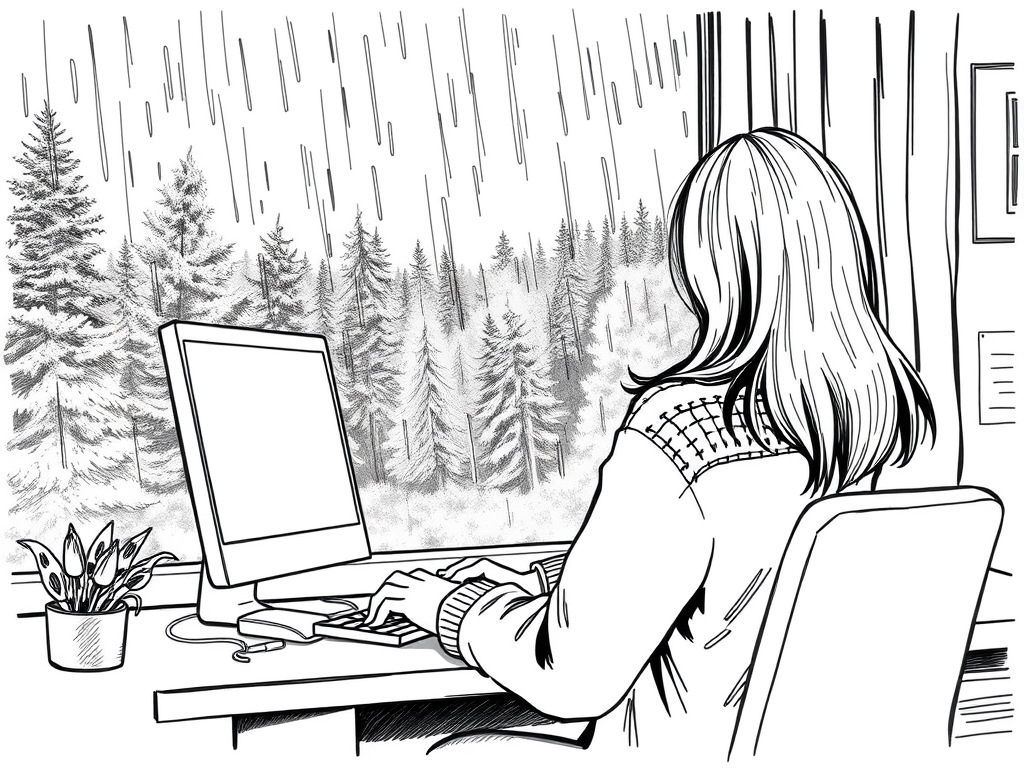
In summer, I’m pulled outward. The garden calls, the sun insists, and I answer. I bask, I breathe, I forget the discipline that writing demands. Inspiration scatters like pollen in the wind. But when the skies darken and the chill sets in, I retreat. Indoors. Inward. Back to the quiet companionship of my computer — a relationship that, despite everything, brings me joy.
There’s something about the rhythm of rain on the windows, the hush of grey mornings, that makes space for words. I write more. I write better. I write with a kind of honesty that only autumn seems to allow.
So here’s to the season of stillness. Of stories. Of showing up at the page, even when the world feels heavy.
This autumn I’ll be writing more often — both here on rosieglobal.com and on my newer blog, theunseenme.com, where I explore the realities of invisible disabilities. It’s a space I’ve long wanted to create: honest, reflective, and rooted in lived experience.
And if all goes well, I’ll be stretching even further — toward something that feels both thrilling and terrifying: writing a book. I don’t know if I’ll manage it, but I do know I want to try.
So thank you for being here. I hope these words offer you warmth, recognition, or simply a moment of quiet. Let’s see where this season takes us.
If you enjoy reading my insights and would like to stay updated on my latest posts, please subscribe to my blog for email notifications. Subscription is free!
“Evil, I think, is the absence of empathy.” — Captain G.M. Gilbert, Army psychologist at the Nuremberg Trials
Gilbert observed this moral void among Nazi defendants, noting their inability to connect emotionally with other human beings. Evil, then, may not stem from a desire to harm but from an unwillingness—or incapacity—to care. It is not always malicious action that defines evil, but a haunting indifference to suffering.
This idea weighs heavily as, while I write this blog, the U.S. Senate debates what some hail as the “Big Beautiful Bill” and others condemn as the “Big Ugly Bill.” Regardless of where one stands politically, the consequences of this legislation are monumental—particularly for those most reliant on governmental support.
If enacted, 12 million peoplecould lose Medicaid, their only access to health insurance, according to projections from the Congressional Budget Office and several health policy organizations. To remain eligible, individuals may be required to work up to 80 hours per weekand re-apply every six months.
Reforms to the Supplemental Nutrition Assistance Program (SNAP) would transfer funding responsibility to states and impose work requirements on childless enrollees—measures that threaten the lifeline of over 40 million low-income Americans.
What disturbs me is not the political debate, but the absence of a deeper question: What will this mean for the future of our society?
In 2023, 11.1% of the population—roughly 36.8 million Americans—lived below the poverty line, according to the U.S. Census Bureau. Nearly 29% of the population lived in low-income families, defined by the Pew Research Center as earning less than two-thirds of the national median income.
In 2022, about 12.8% of Americans experienced food insecurity, according to the U.S. Department of Agriculture. On a global scale, the Organization for Economic Cooperation and Development (OECD) reports that the U.S. has the highest poverty rate among its 26 most developed member countries. Further, a UNICEF study ranks the United States second in relative child poverty, surpassed only by Mexico, when measured against 35 of the world’s richest nations. The weight of these statistics is not just economic—it’s existential.
Childhood poverty isn’t a temporary hardship. It’s a chronic condition with lasting consequences. The longer a child lives in poverty, the less likely they are to escape it. According to Ballard Brief, children who grow up poor are up to 46% more likely to remain poor into adulthood. Every year spent in poverty decreases the chance of escaping it by nearly 20%. This isn’t just misfortune. It’s a broken system of intergenerational inequity.
And now, we’re preparing to cut deeper into the support structures these children rely on.
The familiar refrain is: “Children are our future.” But what kind of future are we building if one-third of our children are undernourished, undereducated, and underserved?
Children in low-income families have limited access to quality education and nutritious food. Healthcare is a luxury, and safe environments are not guaranteed. The playing field isn’t just uneven—it’s obstructed. They are given fewer tools, fewer chances, and less support to climb toward a stable adulthood.
The bill currently under debate doesn’t just trim budgets—it trims hope. By withdrawing investment in childhood development, we are not just ignoring our most vulnerable; we are sabotaging society’s long-term potential.
So, what is the alternative?
We invest. We level the playing field. We provide children—regardless of income—with access to safe schools, nourishing food, sports programs that heal hearts and build character, and environments that spark ambition instead of extinguishing it. We make sure their caretakers are well nourished and can provide a stable environment for them. We invest in their communities, making them safe places to love and thrive.
This kind of investment requires compassion, and yes, it costs money—lots of it. But then, what kind of revenue do we value more? Extra profits for the already privileged or a robust, equitable society?
Empathy is not weakness. It’s strength. Compassion is not charity. It’s policy. And societal evil? It isn’t born from malice—it grows in the shadow of indifference.
If you enjoy reading my insights and would like to stay updated on my latest posts, please subscribe to my blog for email notifications. Subscription is free!
On Monday, I shared thoughts on the lived experience of disability. I unexpectedly received messages of gratitude from readers across the board. There is so much quiet hurt in the world—people feeling misunderstood, or navigating conversations about illness without care or compassion.
Yesterday, I had a conversation with a rehabilitation doctor. He asked whether I find it difficult to communicate what I go through as someone with an invisible disability. I explained that it’s not so much the ability to articulate it—that part, I’ve honed. The difficulty lies in being understood. People don’t always have the shared experience needed to grasp what the words truly mean. For example, chronic fatigue isn’t simply “being tired.” Tiredness can be resolved by rest. Chronic fatigue is unpredictable, invasive, and unrelenting.
I told him: the only way to bridge the gap is to shine a light on what invisible disabilities are, to inform the broader public about the challenges we face, and to make it part of our social conversation. Once we’ve done that—then ask me again if it’s hard to communicate what I go through.
More information and more visibility are urgently needed. And I’m more than willing to provide it. Today, I want to start by exploring what often goes unseen—what’s misunderstood, overlooked, or dismissed. Invisible disabilities can shape every aspect of a person’s life and may prevent full access to the world around them.
When people think of accessibility, they often picture ramps, lifts, or wide doorways. Those are vital—but accessibility goes far beyond bricks and concrete. For those of us living with invisible disabilities, access might mean flexibility with time. It might mean freedom from harsh lighting, loud noise, or overstimulating environments. It might mean understanding that energy is not just limited but also unpredictable, and that “pushing through” can have lasting consequences.
Access means being able to exist, participate, and belong—without having to constantly justify your needs.
In modern life, we’ve grown used to explaining how we feel, defending our thoughts, and using words to build bridges of understanding. But here’s the golden rule of communication: the message must be received and understood by the other person. If I tell you my dog has blue hair, but you don’t know what “blue” means, you’ll miss the point. So when I say that fatigue is a debilitating part of my condition, someone might hear “fatigue = tired,” and think, “I get tired too, but I push through and go to bed early—why can’t you do the same?”
That’s where miscommunication starts. And once misunderstanding sets in, it often leads to misplaced accountability and judgment.
We live in a culture that values performance and productivity. We hold people accountable for what they do—which, in many cases, is entirely reasonable. But what happens when someone is judged by standards shaped by assumptions? When a person is scrutinized for not working, simply because their disability isn’t visible? Or asked to explain why they can function one day and not the next?
The truth is, society isn’t designed with invisible challenges in mind. If your condition isn’t visible, many assume you’re fine. But this assumption erases the labor it takes just to show up. It dismisses the brain fog, the pain, the anxiety—and the constant effort to mask it all in order to be seen as “normal.”
And that masking itself is exhausting. The pressure to be believed, to seem capable, to avoid suspicion—it all adds to the weight we carry. It fuels stress, deepens isolation, and increases the distance between us and the world.
So how do we begin to make space for invisible disabilities? How do we make society more accessible?
It begins with a shift—from suspicion to trust. That’s not a small ask. In today’s world, it’s a paradigm shift. But it’s not about special treatment. It’s about equal footing. It’s about creating spaces where people don’t have to fight to be believed before they’re offered support.
How do we spark that shift? We start by listening. Without judgment. With open hearts. With a willingness to be wrong and to grow. We start by saying, “Even if I haven’t lived it, I believe you.” We start by giving people what they need to thrive—and valuing them for who they are, not for how much they produce.
Not everyone’s experience looks the same. But every voice deserves to be heard. Let’s listen to those voices. And let’s make space—for all of us.
If you enjoy reading my insights and would like to stay updated on my latest posts, please subscribe to my blog for email notifications. Subscription is free!
Dealing with an invisible chronic illness isn’t easy. Beyond the fatigue, physical pain, and brain fog, there’s another layer of struggle: people don’t see how unwell you are. They see the outside—maybe a sun-kissed face, some makeup, a well-put-together outfit, a warm greeting—and they draw their own conclusions.
They see you show up at a birthday party and think, “She must be doing better.” They don’t know that you had to sleep for two hours beforehand and will now be in bed—or glued to the couch—for the next three to five days because you went. They ask how you’re doing, and you say, “I’m fine.” Not because it’s true, but because sometimes you’re simply tired of talking about being sick.
In my case, I really do get sick of talking about being sick.
So yes, people sometimes assume I’m better than I am. Some may even think I exaggerate my illness. After all, lots of people are tired—and they still get up and go to work. Why can’t I?
It’s okay. I understand how society copes with things it can’t see or make sense of: it labels, defines, reduces. It filters experience through its own lens so the unfamiliar becomes manageable. Living with an invisible illness for the past five years has taught me to tune out those voices. I’ve learned to define myself based on my own sense of worth, not the value placed on me by others.
When ‘Illness” becomes “Disability”
Still, that definition of self took a jolt last week. While doing research for my book on invisible illnesses, I came across something unexpected: several major health organizations now classify my condition as an invisible disability. That word stopped me cold.
According to the World Health Organization’s World Report on Disability (2011), disability is defined using the International Classification of Functioning, Disability and Health (ICF), which breaks down functioning into three interconnected categories:
Impairments: problems with body function or structure
Activity limitations: difficulties in executing tasks or actions
Participation restrictions: challenges with involvement in life situations
Disability, then, isn’t about one diagnosis—it’s about how health conditions interact with personal and environmental barriers to limit engagement in life. The ICF uses neutral language and doesn’t distinguish between physical or mental origins. If your condition affects your ability to function and participate fully, it qualifies.
Suddenly, I found myself staring at the screen thinking: Wait. You mean I’m disabled?
The word “disability” has always carried a specific image in my mind—something concrete, visible, undeniable. I never thought to put my illness, or any chronic illness, in that category. Illness felt like a challenge, something to fight, to manage, to overcome. Disability felt… definitive. Permanent.
But that’s the thing: having a chronic illness is a disability. It impacts my ability to participate in society. It limits what I can do. It interferes with basic functioning. And it’s real, whether people see it or not.
Seeing the Unseen
According to Hidden Disabilities Sunflower, one in six people globally live with a disability. Of those, an estimated 80% are non-visible. That’s over a billion people, most of them unseen—and undervalued. Yet every one of them has something meaningful to offer. We want to engage. We want to be included. We deserve the space to contribute.
Maybe “disability” is a better word after all. “Illness” often implies recovery is coming, or should be. There’s an unspoken apology in it, a pressure to heal. “Disability,” on the other hand, demands society’s acceptance. It calls for accessibility, empathy, and policy that affirms our worth.
So here I am: a woman with an invisible disability. And an awful lot to give—to those who acknowledge my boundaries, honor my integrity, and respect my value.
Maybe it’s time we all reconsider what disability really looks like—and who we assume doesn’t carry it.
If you enjoy reading my insights and would like to stay updated on my latest posts, please subscribe to my blog for email notifications. Subscription is free!
Some time ago, I ran into an old acquaintance I hadn’t seen in years. As we engaged in the expected exchange of updates, I asked about her eldest daughter. She told me her daughter was doing well—she had recently married—but when I asked whether she planned to have children soon, her answer was sobering: “No, she’s too concerned about what’s happening in the world. She feels it isn’t a safe place to have children.”
Her daughter doesn’t live in a war-torn or impoverished country. She lives in Western Europe, holds a stable job, and comes from a loving home. Yet, despite having every material advantage, she fears the future enough to forgo motherhood.
At another social event, I spoke separately with two young women in their early thirties, both struggling with mental health issues. They shared their fears about not being able to function in today’s world, burdened by pressure and uncertainty about their futures.
In yet another conversation, a friend’s acquaintance told me she had to force herself to leave the house because agoraphobia was creeping in. She was seeing a mental health specialist to address her anxiety and other struggles.
These encounters left me deeply unsettled. Mental health issues, especially among young women, are nothing new. History reminds us of the struggles faced by Virginia Woolf, Charlotte Perkins Gilman, and Sylvia Plath—women who grappled not only with personal turmoil but also societal pressures. More recently, we have seen reports detailing the impact of the COVID-19 pandemic on younger generations. Yet, I can’t shake the feeling that something more is happening. It seems that more young women than ever before are struggling to cope.
The Statistics Speak Volumes
According to a 2017 report by Mental Health UK, women are three times more likely than men to experience common mental health problems such as depression and anxiety. In 1993, this risk was twice as likely, meaning the disparity is growing. Rates of self-harm have tripled since 1993, and young women are three times more likely than men to suffer from post-traumatic stress disorder. Additionally, anxiety-related conditions are most prevalent among young women.
These statistics are mirrored across Western Europe and North America, and numbers have continued to rise since the pandemic. But why do women experience more mental health challenges than men?
The Weight of Modern Pressures
The reasons behind this crisis are complex and multifaceted. Biological factors such as hormonal fluctuations play a role, but socio-economic stressors are equally significant. Poverty, workplace inequality, physical and sexual abuse, and the pressures of caregiving all contribute to heightened levels of anxiety and depression.
Yet these issues have existed for centuries—so why have rates increased so dramatically in recent years?
Professor Jayashri Kulkarni from HER Centre Australia at Monash University suggests that modern young women face a unique set of challenges in navigating their identities, including:
Career and educational aspirations
Body image insecurities
Sexual and relationship expectations
Social network development and maintenance
Social media exacerbates these pressures by fostering unrealistic comparisons and misinformation. Many young women engage in digital relationships that can deepen feelings of isolation and disconnect from reality.
Additionally, loneliness is an often-overlooked factor. Kulkarni notes that young women experience profound feelings of emptiness more commonly than acknowledged. The pandemic lockdowns intensified this issue, cutting them off from critical support systems and social outlets.
Surveys measuring post-pandemic mental health reveal increased rates of depression, anxiety, eating disorders, and substance addictions—especially among young women. Though the restrictions have lifted, their emotional wounds continue to linger.
A Generational Struggle
The pressures faced by young women today differ from those of previous generations. While women have long balanced multiple roles, today’s digital world imposes new standards—curated beauty ideals, relentless public scrutiny, and a culture where mistakes can be magnified and immortalized online. Unlike before, there’s little room for imperfection.
So, how do we help this generation of smart, creative, compassionate, and talented young women?
We start by reminding them that they are more than enough. We offer support not by merely asking what they need, but by showing up—attuned to their struggles, ready to help in ways they might not yet articulate.
We foster stronger communities so that no one faces their burdens alone, making caregiving a shared responsibility rather than an isolating duty.
We tell them it’s okay to stumble, that they are beautiful in every facet of their existence—flaws and all.
Most importantly, we hold them close in our hearts and refuse to let them slip through the cracks.
If you enjoy reading my insights and would like to stay updated on my latest posts, please subscribe to my blog for email notifications. Subscription is free!
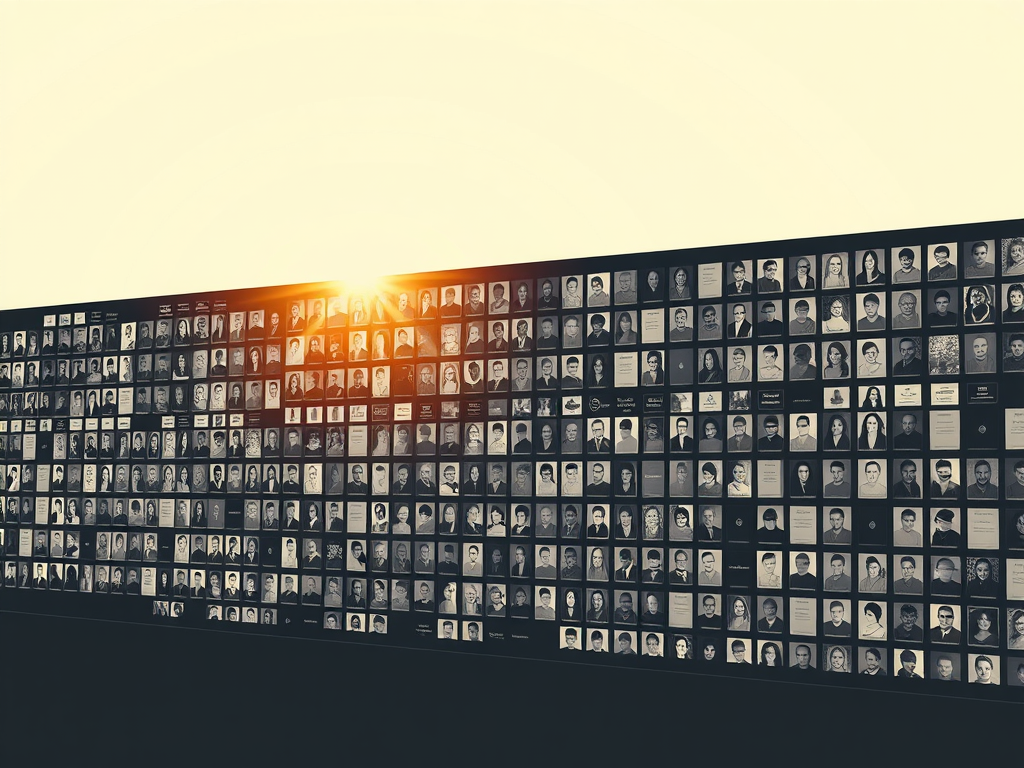
This past Sunday, March 9th, the British observed their annual Covid Day of Reflection. In London, a Highland piper led bereaved relatives and well-wishers along the national Covid memorial wall, which features 3,000 photographs of individuals who lost their lives to the virus—a small portion of the total 227,000 deaths in the UK alone. According to the World Health Organization, at least 3 million people died, directly or indirectly, due to Covid infections in 2020 alone. As of March 9th, 2025, there have been 7,090,763 confirmed Covid-induced deaths reported worldwide.
Moreover, it has been estimated that, as of January 2023, taking into account likely Covid-related deaths through excess mortality, the pandemic has caused between 19.1 million and 36 million deaths globally. (1)
With so much unfolding in the world, the pandemic seems like a distant memory. But it has only been five years, and the world is still grappling with its aftermath. In an article published in Nature magazine in August 2024, titled “Long COVID: Science, Research, and Policy,” researchers Ziyad Al-Aly et al. stated that “the cumulative global incidence of long COVID is around 400 million individuals, which is estimated to have an annual economic impact of approximately $1 trillion—equivalent to about 1% of the global economy.”
Beyond the economic distress, the effects of long Covid are devastating for those affected. Many are battling a chronic illness that the medical community has yet to fully understand, let alone treat. Most have lost their jobs and sources of income, becoming socially isolated due to debilitating fatigue among other symptoms. Prospects for a cure appear bleak, as this multi-system disease manifests differently in each individual, complicating efforts to develop a universal treatment.
In addition to the emergence of a new chronic disease, Covid—along with the measures implemented during the pandemic—has been identified as a contributing factor in the rising number of individuals struggling with mental health issues. Many of these individuals are children and young adults who have struggled to cope with the shutdown of schools, social distancing mandates, community lockdowns, and strict quarantine measures. The lack of social interaction and the fear of contagion have left an indelible mark on an entire generation.
Family members of those who died during the pandemic continue to feel the pain of not being able to hold their loved ones’ hands in their final moments or say goodbye in person. They remember poignant moments, such as the funeral of the late Prince Philip, where Queen Elizabeth II sat alone in her seat wearing a face mask, unwittingly becoming a symbol of the grief many faced—most of whom were denied the chance to organize proper funerals due to restrictions.
Socio-Political Shifts
In 2021, Kahl and Wright published their book “Aftershocks,” analyzing the pandemic’s impact and long-term effects on national and international politics. They draw comparisons to the Great Influenza of 1918, arguing that pandemics can “shape international order by undermining the material capabilities of key states and by producing contingent historical events that ripple through time. The agitation of underlying forces within and between countries can strain economies, worsen inequality, and contribute to social and political unrest.” The parallels to our post-Covid era are striking. Various scientific publications have noted that deglobalization and increased nationalism and isolationism are socio-political shifts that can be traced back to the pandemic.
So, what does this mean for us? History teaches us that the post-pandemic era following the Great Influenza was fraught with challenges that preceded even darker times. The Roaring Twenties, a period where many sought refuge in entertainment after the devastations of the Great Influenza and World War I, was short-lived and led to the Great Depression and the rise of Nazism. History also demonstrates that in times of crisis, people often focus on protecting ‘their own,’ unwittingly alienating ‘the other.’
Today, we find ourselves witnessing economic decline, increased protectionist measures by governments, a rise in nationalism and white supremacism in the Western world, and deglobalization—all against the backdrop of influencers and reality shows. Despite the warning signs and the voices of the alarmed, the masses remain unconvinced that catastrophe could loom if the tide does not shift.
Lessons to Be Learned
In contemplating the lessons to be learned from the pandemic, there appears to be a predominant focus on organizational aspects: How do we respond to the next pandemic? Should we reserve funds? How do we structure our health systems? Who needs a seat at the table to determine necessary measures?
What seems to be overlooked is the impact of the Covid pandemic on geopolitical affairs. Had this been a focus, perhaps the discussions taking place today would be different. World leaders would analyze social movements and seek to address the sources of discontent among their citizens, rather than merely responding to it with political rhetoric. They would heed the warning signs of emerging nationalism and protectionism and recognize where this path led a century ago. They would come to understand that global connectivity is essential to preserving humanity.
Is Covid entirely to blame for our current global situation? No, of course not. But it is a contributing factor that should not be dismissed. Covid has not only impacted our health and economies; it has, whether consciously or unconsciously, altered our perceptions of the world in which we live. The more aware we are of this, the more we can do to reverse its effects before it’s too late.
If you enjoy reading my insights and would like to stay updated on my latest posts, please subscribe to my blog for email notifications. Subscription is free!

 RosieGlobal
You must be logged in to post a comment.