
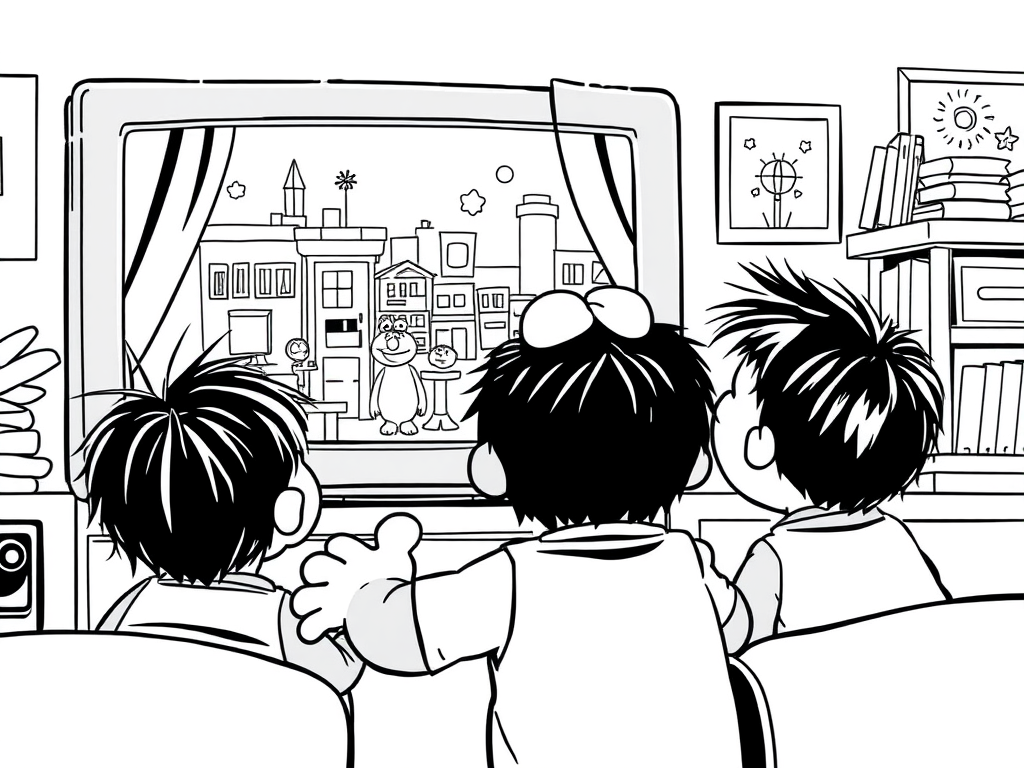
For the first time ever, I find myself saying: “Hurray for Netflix!”—because it just might have saved Sesame Street.
Like many American children, I grew up watching Sesame Street. As a first-generation viewer, I was captivated by Big Bird, learned to count with Count von Count, and happily sang along with Ernie to Rubber Ducky. My fondness for that little yellow duck runs so deep that I still have its birthday marked on my calendar—January 13th, for those who want to celebrate too! But beyond the songs and characters, Sesame Street gave me something even more valuable: the foundational knowledge, social skills, and essential tools I needed to prepare for kindergarten.
The Vision Behind Sesame Street
The idea for Sesame Street was born in 1966, when Joan Ganz Cooney, executive director of the Children’s Television Workshop, and Lloyd Morrisett, vice president of the Carnegie Foundation, envisioned a children’s television show that would harness the power of TV for education. As Cooney described it, they wanted to “master the addictive qualities of television and do something good with them” (Michael Davis, Street Gang: The Complete History of Sesame Street).
At a press conference on May 6, 1969, Sesame Street was officially announced as an innovative program that would use commercial television techniques to teach young children. By blending live-action sketches, animated cartoons, and puppetry, the show would introduce preschoolers to essential concepts—letters, numbers, vocabulary, shapes, and reasoning skills. Repetition throughout each episode would ensure young audiences remained engaged while absorbing important lessons. The name Sesame Street itself was chosen to evoke the magic of discovery, inspired by the phrase “Open Sesame!”—suggesting a place where exciting things happen.
When the show premiered on November 10, 1969, its mission was clear: to prepare children for school, particularly those from low-income backgrounds who might not have access to early education. By 1996, a staggering 95% of American preschoolers had watched it by age three, and by 2018, it was estimated that 86 million Americans had grown up with Sesame Street.
The Fight for Accessibility
From its inception, Sesame Street aired on PBS, a public broadcasting network offering free programming. This accessibility was crucial for low-income families who depended on the show as an early education tool. However, when the Trump administration reduced funding for PBS, Sesame Street faced an uncertain future. The potential loss of free access meant that the very children who needed Sesame Street the most could lose their connection to its invaluable lessons.
The decision to slash funding for PBS was deeply distressing—not just because it affected educational programming, but because it signaled a fundamental misunderstanding of how critical early childhood education is for children who cannot afford preschool. These kids wouldn’t just miss out on learning letters and numbers—they’d lose the examples of kindness, diversity, self-worth, and the power of positive social interactions. For many, Sesame Street is their only exposure to these essential developmental values.
Why It Matters
In a world increasingly divided by socio-economic disparities, investing in early education is not optional—it is essential. Children need education, healthcare, and stable environments to thrive and grow into balanced, engaged citizens. These future generations will shape our society, and it is our responsibility to ensure they have the tools to do so.
And that’s where Netflix comes in. By stepping up and ensuring PBS can continue broadcasting Sesame Street, Netflix has done something truly meaningful. It has recognized the importance of preschool education for disadvantaged children and preserved a program that has enriched young minds for over five decades.
So yes, Netflix—you’ve found your way to Sesame Street, and in doing so, you’ve helped keep its doors open for those who need it most.
If you enjoy reading my insights and would like to stay updated on my latest posts, please subscribe to my blog for email notifications. Subscription is free!
 RosieGlobal
You must be logged in to post a comment.