
Covid-19 is more than ‘just a flu’.
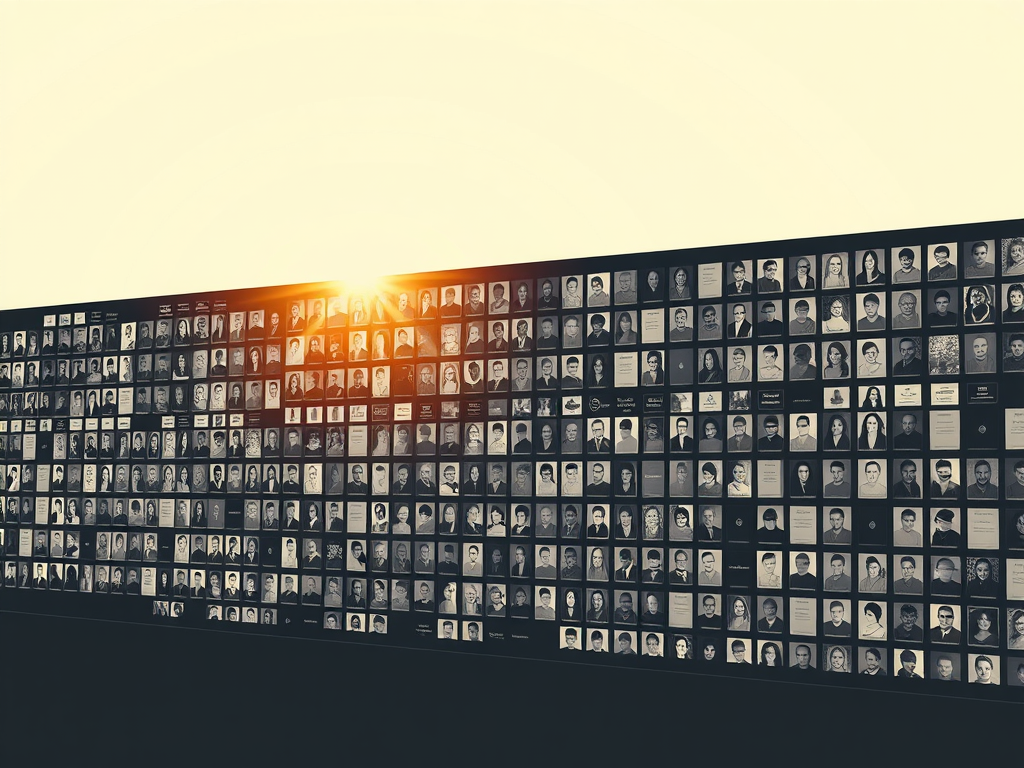
This past Sunday, March 9th, the British observed their annual Covid Day of Reflection. In London, a Highland piper led bereaved relatives and well-wishers along the national Covid memorial wall, which features 3,000 photographs of individuals who lost their lives to the virus—a small portion of the total 227,000 deaths in the UK alone. According to the World Health Organization, at least 3 million people died, directly or indirectly, due to Covid infections in 2020 alone. As of March 9th, 2025, there have been 7,090,763 confirmed Covid-induced deaths reported worldwide.
Moreover, it has been estimated that, as of January 2023, taking into account likely Covid-related deaths through excess mortality, the pandemic has caused between 19.1 million and 36 million deaths globally. (1)
With so much unfolding in the world, the pandemic seems like a distant memory. But it has only been five years, and the world is still grappling with its aftermath. In an article published in Nature magazine in August 2024, titled “Long COVID: Science, Research, and Policy,” researchers Ziyad Al-Aly et al. stated that “the cumulative global incidence of long COVID is around 400 million individuals, which is estimated to have an annual economic impact of approximately $1 trillion—equivalent to about 1% of the global economy.”
Beyond the economic distress, the effects of long Covid are devastating for those affected. Many are battling a chronic illness that the medical community has yet to fully understand, let alone treat. Most have lost their jobs and sources of income, becoming socially isolated due to debilitating fatigue among other symptoms. Prospects for a cure appear bleak, as this multi-system disease manifests differently in each individual, complicating efforts to develop a universal treatment.
In addition to the emergence of a new chronic disease, Covid—along with the measures implemented during the pandemic—has been identified as a contributing factor in the rising number of individuals struggling with mental health issues. Many of these individuals are children and young adults who have struggled to cope with the shutdown of schools, social distancing mandates, community lockdowns, and strict quarantine measures. The lack of social interaction and the fear of contagion have left an indelible mark on an entire generation.
Family members of those who died during the pandemic continue to feel the pain of not being able to hold their loved ones’ hands in their final moments or say goodbye in person. They remember poignant moments, such as the funeral of the late Prince Philip, where Queen Elizabeth II sat alone in her seat wearing a face mask, unwittingly becoming a symbol of the grief many faced—most of whom were denied the chance to organize proper funerals due to restrictions.
Socio-Political Shifts
In 2021, Kahl and Wright published their book “Aftershocks,” analyzing the pandemic’s impact and long-term effects on national and international politics. They draw comparisons to the Great Influenza of 1918, arguing that pandemics can “shape international order by undermining the material capabilities of key states and by producing contingent historical events that ripple through time. The agitation of underlying forces within and between countries can strain economies, worsen inequality, and contribute to social and political unrest.” The parallels to our post-Covid era are striking. Various scientific publications have noted that deglobalization and increased nationalism and isolationism are socio-political shifts that can be traced back to the pandemic.
So, what does this mean for us? History teaches us that the post-pandemic era following the Great Influenza was fraught with challenges that preceded even darker times. The Roaring Twenties, a period where many sought refuge in entertainment after the devastations of the Great Influenza and World War I, was short-lived and led to the Great Depression and the rise of Nazism. History also demonstrates that in times of crisis, people often focus on protecting ‘their own,’ unwittingly alienating ‘the other.’
Today, we find ourselves witnessing economic decline, increased protectionist measures by governments, a rise in nationalism and white supremacism in the Western world, and deglobalization—all against the backdrop of influencers and reality shows. Despite the warning signs and the voices of the alarmed, the masses remain unconvinced that catastrophe could loom if the tide does not shift.
Lessons to Be Learned
In contemplating the lessons to be learned from the pandemic, there appears to be a predominant focus on organizational aspects: How do we respond to the next pandemic? Should we reserve funds? How do we structure our health systems? Who needs a seat at the table to determine necessary measures?
What seems to be overlooked is the impact of the Covid pandemic on geopolitical affairs. Had this been a focus, perhaps the discussions taking place today would be different. World leaders would analyze social movements and seek to address the sources of discontent among their citizens, rather than merely responding to it with political rhetoric. They would heed the warning signs of emerging nationalism and protectionism and recognize where this path led a century ago. They would come to understand that global connectivity is essential to preserving humanity.
Is Covid entirely to blame for our current global situation? No, of course not. But it is a contributing factor that should not be dismissed. Covid has not only impacted our health and economies; it has, whether consciously or unconsciously, altered our perceptions of the world in which we live. The more aware we are of this, the more we can do to reverse its effects before it’s too late.
1- Mathieu, Edouard; Ritchie, Hannah; Rodés-Guirao, Lucas; Appel, Cameron; Giattino, Charlie; Hasell, Joe; Macdonald, Bobbie; Dattani, Saloni; Beltekian, Diana; Ortiz-Ospina, Esteban; Roser, Max (2020–2024). “Coronavirus Pandemic (COVID-19)”. Our World in Data
If you enjoy reading my insights and would like to stay updated on my latest posts, please subscribe to my blog for email notifications. Subscription is free!


 RosieGlobal
Leave a comment